Replacement Slider and Lifter Components for Mold Maintenance
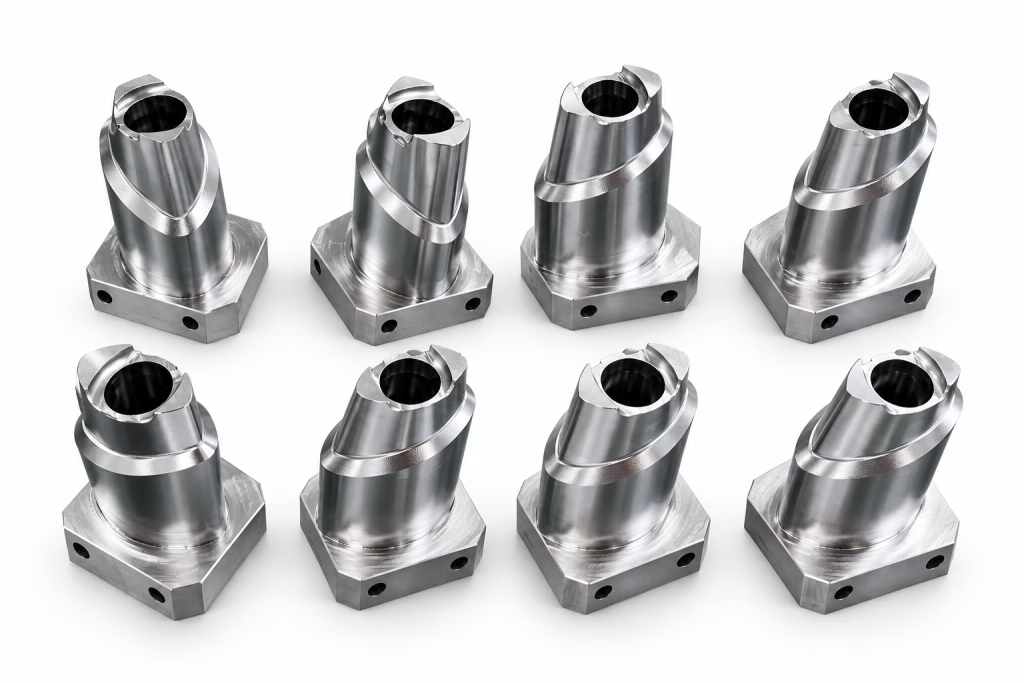
Replacement slider and lifter-related components manufactured for existing injection molds where worn or damaged forming parts need accurate fit and functional replacement.
Project Background
Project Background
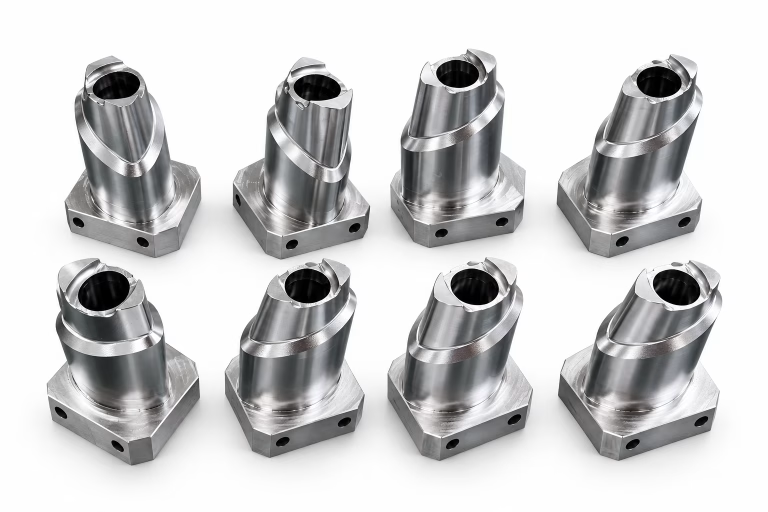
This case focuses on replacement forming components used during injection mold maintenance. The parts are suitable for situations where original slider-related or lifter-related components have worn surfaces, unstable fit, or damaged forming areas after production use.
Replacement work is different from making a new component for a new mold. The new part often needs to match the existing assembly condition, confirmed drawing, old sample, or measured reference data, so it can be installed without unnecessary adjustment.
Engineering Challenges
Engineering Challenges
Matching existing assembly fit
The replacement component must suit the mold condition already in use.
Restoring working height
Height and position affect forming contact, shut-off relationship, and molded feature stability.
Keeping replacement consistency
When multiple components are replaced together, functional dimensions need to stay consistent.
Checking practical fit features
Mounting holes, base surfaces, and working profiles must be verified before shipment.
Engineering Solution
Engineering Solution
Drawing Review
MOLDVANCE reviews the old component, drawing, or measurement data before production. The focus is placed on the dimensions that affect replacement fit: base contact, mounting position, working height,...
Process Planning
The components are machined with CNC and EDM according to geometry requirements. Grinding and polishing are used for contact and forming areas.
Manufacturing Route
Manufacturing Route
Confirm drawing, old part, or measurement reference before production.
Produce the base, cylindrical forming area, and mounting features.
Machine local profiles or detailed forming areas.
Control base surfaces, fit areas, and key height-related dimensions.
Finish forming areas for release and surface consistency.
Verify working height, hole fit, forming profile, and batch consistency.
Material and Requirements
Material and Requirements
Materials
Material is selected according to the original component requirement or confirmed maintenance need. For replacement forming components, compatibility with the existing mold and expected wear condition is more important than using a generic material choice.
Heat Treatment
Heat treatment is used only when required by the drawing or replacement specification. Final machining and inspection are planned to maintain height, base fit, and forming accuracy after treatment.
Surface Requirement
Base and mounting surfaces require stable fit. Forming surfaces require controlled finish to restore molding function and reduce release-related issues.
Precision Control
Precision Control
Tolerance Capability
Replacement tolerances are reviewed against the actual reference condition. When the old mold condition is involved, critical dimensions should be confirmed from drawing, sample, or measured data before production.
Key Control Points
- Working height
- Base surface
- Mounting hole
- Forming profile
| Critical Feature | Why It Matters |
|---|---|
| Working height | Affects forming position and mold contact. |
| Base surface | Controls how the part seats in the mold. |
| Mounting hole | Affects installation and alignment. |
| Forming profile | Restores the molded feature. |
| Fit diameter or width | Controls replacement fit. |
| Surface condition | Influences wear and release behavior. |
Quality Inspection
Quality Inspection
Inspection Method
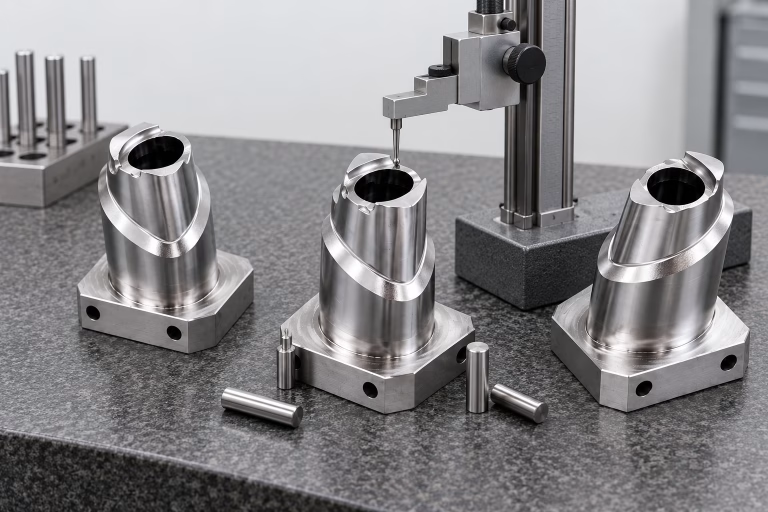
Inspection can include height gauge measurement for working height, gauge pin checks for mounting holes, surface plate checks for base contact, and CMM/profile measurement when the forming geometry requires 3D verification
RFQ CTA
Need Similar Precision Components?
Send your drawings, material requirements, quantity and inspection expectations for engineering review.