Precision Lifter Inserts for Injection Molds
Precision lifter inserts manufactured for injection molds that require angled release movement, stable guide fit, and accurate internal undercut forming.
Project Background
Project Background
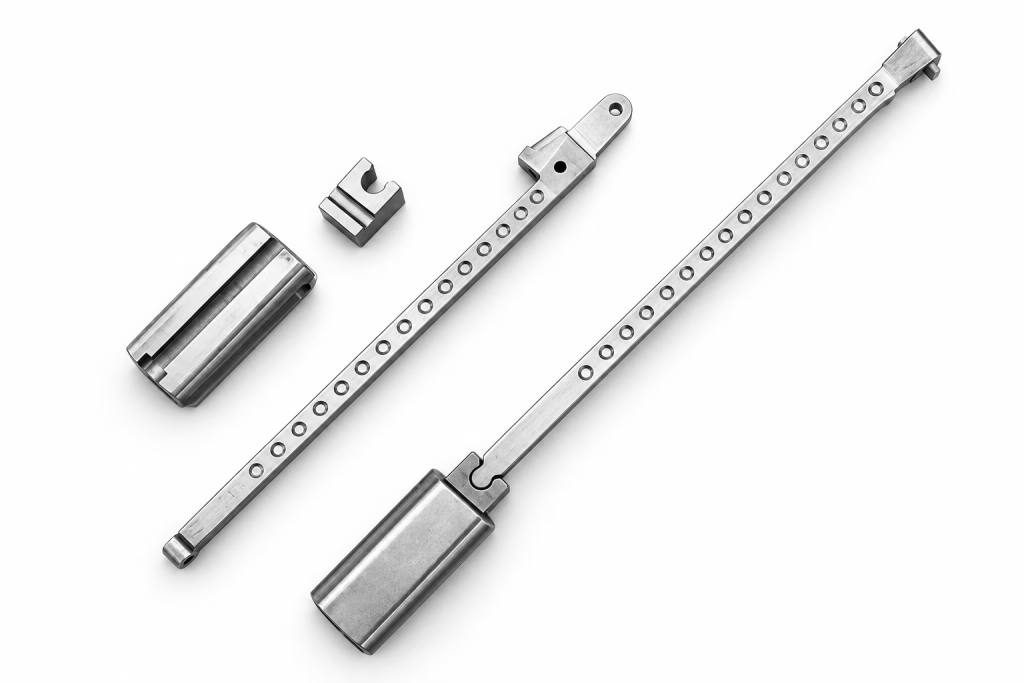
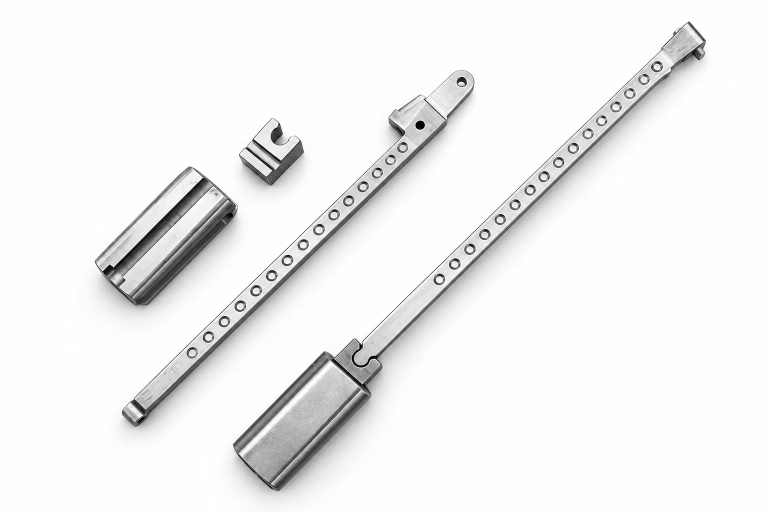
This case focuses on long precision lifter inserts used in injection molds with angled release movement. The parts include long guide sections, repeated mounting holes, and machined fitting features that need to align with the mold’s lifter mechanism.
Compared with compact inserts, long lifter components are more sensitive to straightness, hole position, guide angle, and fitting clearance. Small errors can cause uneven movement, local wear, or release problems during production.
Engineering Challenges
Engineering Challenges
Long-part straightness
The slender structure must remain stable during machining and inspection.
Hole-position consistency
Repeated holes need accurate spacing and alignment for installation.
Guide-angle control
The lifter angle affects release direction and movement reliability.
The lifter angle affects release direction and movement reliability.
The component must move smoothly without excessive looseness inside the mold.
Engineering Solution
Engineering Solution
Drawing Review
MOLDVANCE controls lifter insert production by treating the part as a movement component, not only a machined block. The guide angle, hole pattern, straightness, contact surfaces, and working...
Process Planning
CNC milling and wire EDM are used for the long profile and side features. Precision grinding is used on guide/contact faces, and optical inspection is suitable for checking...
Manufacturing Route
Manufacturing Route
Machine the long body, mounting features, and working areas.
Cut profiles, slots, or angled features with controlled accuracy.
Produce local detailed features when required.
Finish guide surfaces and contact faces.
Improve working surfaces that affect release and part marking.
Check hole pitch, profile position, and guide-angle related features.
Material and Requirements
Material and Requirements
Materials
Material is selected according to the drawing, mold movement condition, and wear requirement. For lifter inserts, dimensional stability and wear resistance are especially important because the part works under repeated sliding movement.
Heat Treatment
Heat treatment follows the confirmed drawing or project requirement. Long lifter inserts need careful allowance control if heat treatment is involved, because distortion can affect straightness and fit.
Surface Requirement
Guide and sliding surfaces require controlled finish for smooth movement. Forming or working areas are finished according to the molded-part release requirement.
Precision Control
Precision Control
Tolerance Capability
Tolerance control is focused on features that affect motion: guide angle, hole position, fitting width, working length, and straightness. Inspection method is selected according to part length and geometry.
Key Control Points
- Guide angle
- Hole pitch
- Straightness
- Fitting width
| Critical Feature | Why It Matters |
|---|---|
| Guide angle | Controls movement direction. |
| Hole pitch | Affects installation alignment. |
| Straightness | Helps prevent binding. |
| Fitting width | Controls movement clearance. |
| Working length | Affects release timing and forming position. |
| Contact surface | Influences wear and sliding stability. |
Quality Inspection
Quality Inspection
Inspection Method
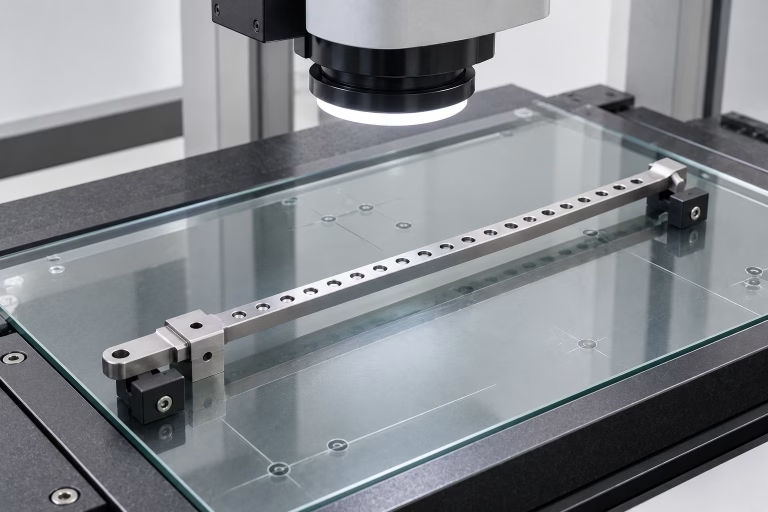
Inspection can include 2D optical measurement for hole pitch and profile alignment, height gauge checks for step/working height, and CMM checks when 3D position verification is required.
RFQ CTA
Need Similar Precision Components?
Send your drawings, material requirements, quantity and inspection expectations for engineering review.