Matched Collapsible Core Sets for Multi-Cavity Injection Molds
Matched collapsible core sets manufactured for multi-cavity injection molds where each core must maintain consistent forming size, movement behavior and assembly position. MOLDVANCE supports batch machining, matching control and inspection for collapsible core components used in high-repeatability mold systems.
Project Background
Project Background
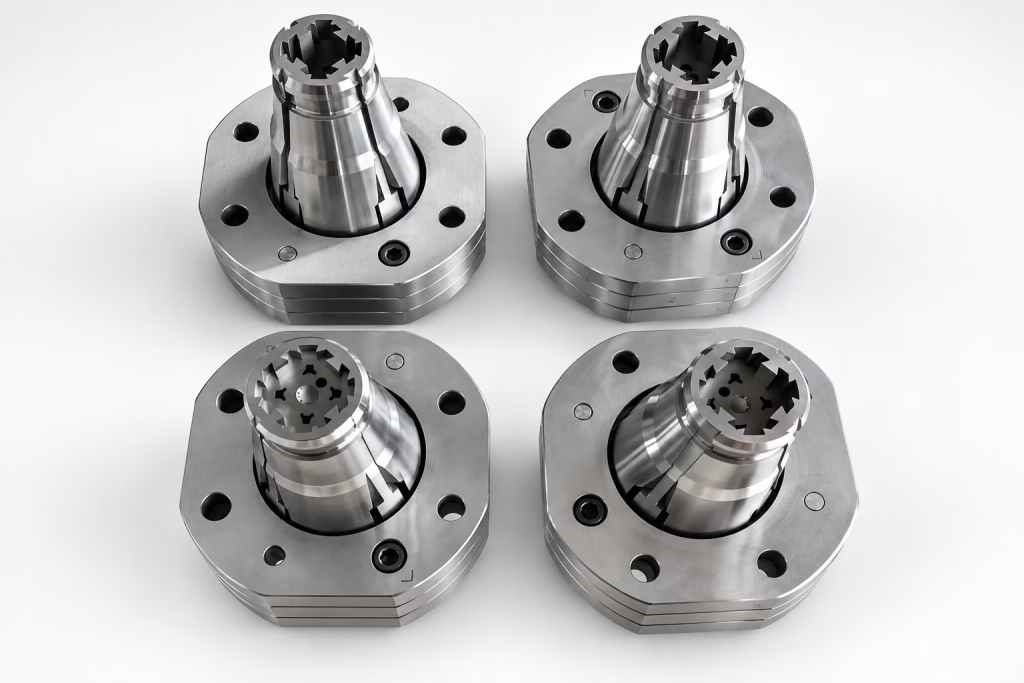
The image shows multiple collapsible core components produced as a set. This type of project is used when a multi-cavity mold requires each cavity to form the same internal undercut or complex internal feature.
For matched collapsible core sets, the key issue is not only whether each core is correct individually. The forming head, taper angle, mounting height, fitting diameter and movement-related surfaces must remain consistent across the complete set.
Engineering Challenges
Engineering Challenges
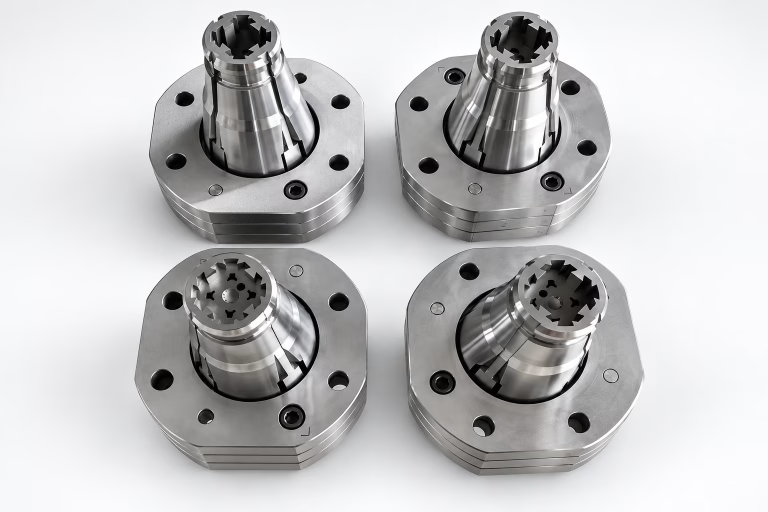
Set Consistency
Every collapsible core in the set must maintain comparable forming dimensions and movement behavior.
Matched Taper and Height
Small differences in taper surface or component height may affect expansion, collapse and molded feature consistency.
Cavity-to-Cavity Repeatability
Each cavity should release and form in the same way to reduce molding variation.
Batch Identification
Matched components should be managed as a controlled set to support assembly, inspection and future replacement.
Engineering Solution
Engineering Solution
Drawing Review
MOLDVANCE manufactures collapsible core sets with consistent machining sequence, datum control and batch inspection. Key dimensions are compared across the set, including forming head geometry, fitting diameter, taper...
Process Planning
When required, components can be identified by cavity number or set position to support mold assembly and maintenance.
Manufacturing Route
Manufacturing Route
Confirm cavity quantity, matching scope, drawing requirements and inspection method.
Prepare components as a controlled batch to reduce variation in machining and finishing.
Machine the main body, tapered areas, round fitting surfaces and forming profiles.
Produce segment details, collapse-related features, slots or local internal geometry.
Control taper surfaces, fitting areas and forming surfaces across the complete set.
Compare critical dimensions across components before shipment.
Material and Requirements
Material and Requirements
Materials
Material consistency is important for matched sets. Material is selected according to drawing requirements, wear resistance and expected production conditions.
Heat Treatment
Heat treatment is applied only when required. For matched sets, consistent hardness and dimensional behavior across the batch are more important than treating each part separately.
Surface Requirement
Sliding surfaces, forming heads and fitting areas should be finished consistently across the set to support stable movement and cavity-to-cavity performance.
Precision Control
Precision Control
Tolerance Capability
Critical dimensions are controlled according to matched-set requirements. Tight tolerance requirements such as ±0.005 mm can be supported where geometry and process conditions allow.
Key Control Points
- Forming head diameter
- Taper surface
- Component height
- Fitting diameter
| Critical Feature | Why It Matters |
|---|---|
| Forming head diameter | Controls molded internal feature consistency. |
| Taper surface | Affects collapse and reset behavior. |
| Component height | Controls assembly position across cavities. |
| Fitting diameter | Supports interchangeability and stable installation. |
| Segment geometry | Affects internal undercut forming and release. |
| Set consistency | Supports repeatable performance in multi-cavity molds. |
Quality Inspection
Quality Inspection
Inspection Method
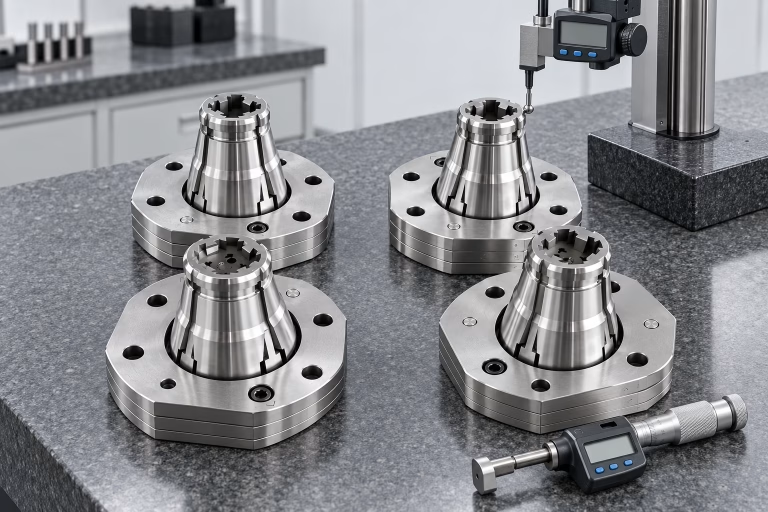
Inspection can include forming head geometry, taper surface, fitting diameter, component height, segment features and batch comparison. For matched sets, inspection should compare key dimensions across the complete group.
RFQ CTA
Need Similar Precision Components?
Send your drawings, material requirements, quantity and inspection expectations for engineering review.