Collapsible Core Components for Precision Plastic Parts with Undercuts
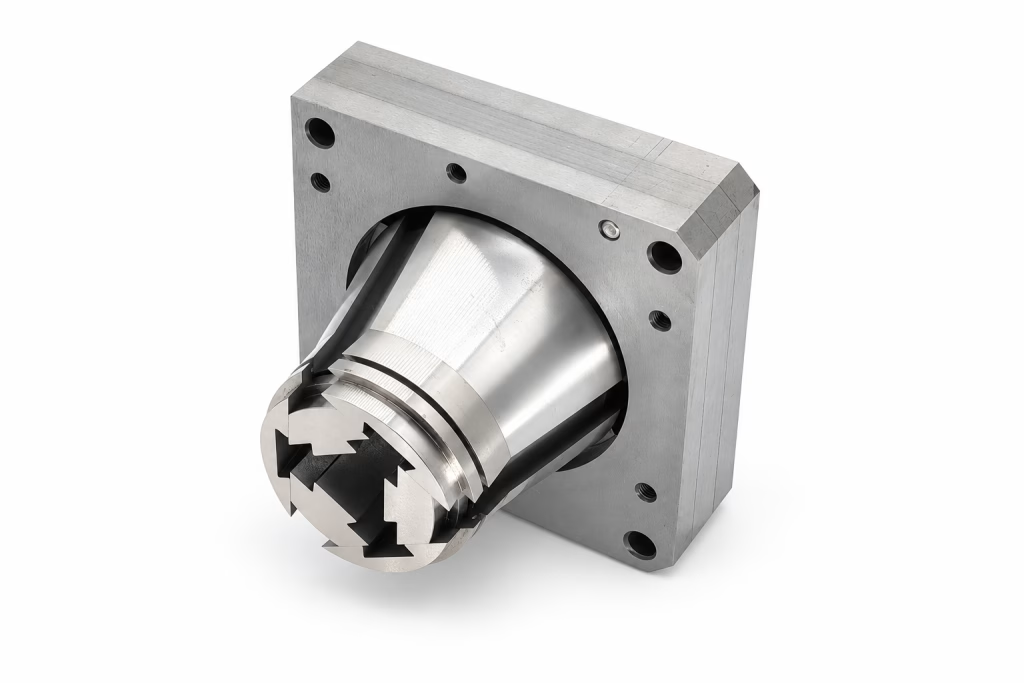
Collapsible core components used for precision plastic parts with internal undercuts, side features or release-limited geometry. The image shows a collapsible core structure assembled with a mold block, highlighting the relationship between the moving core, forming area and surrounding mold support.
Project Background
Project Background
Some plastic parts include internal undercuts, grooves or locking features that cannot be released by a fixed core. A collapsible core allows the internal feature to be formed during injection, then collapses inward so the part can be released.
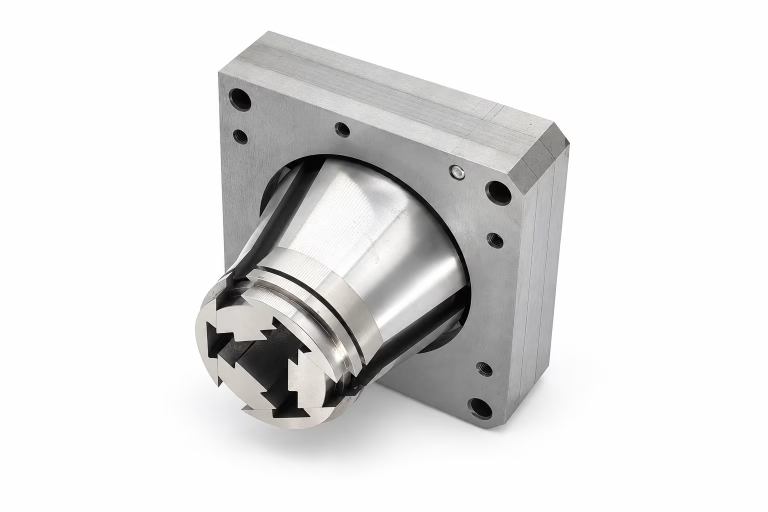
The image shows the collapsible core in relation to the surrounding mold structure. For this application, the important work is controlling the forming profile, movement clearance, support block position and release path as one functional system.
Engineering Challenges
Engineering Challenges
nternal Undercut Release
The core must collapse enough to release the molded feature without damaging the plastic part.
Forming Profile Control
The forming surfaces must match the required internal feature, groove or locking shape.
Mold Structure Coordination
The collapsible core must fit the surrounding mold block, support area and assembly references.
Movement Clearance
Clearance must be controlled so the core moves reliably without excessive play or interference.
Engineering Solution
Engineering Solution
Drawing Review
MOLDVANCE reviews the molded feature, release direction, core movement, surrounding mold structure and inspection requirements before machining. The component is manufactured with attention to forming profile, sliding areas,...
Process Planning
The focus is not only the core itself, but how the collapsible mechanism works inside the mold structure.
Manufacturing Route
Manufacturing Route
Review the plastic part undercut, release requirement and mold assembly relationship.
Machine the core body, mold block fitting areas and main forming geometry.
Process internal corners, narrow release features or detailed undercut-forming areas.
Control support surfaces, fitting areas and movement-related reference dimensions.
Finish forming surfaces and sliding areas to support release and reduce sticking.
Check forming geometry, assembly references and movement-related clearances before shipment.
Material and Requirements
Material and Requirements
Materials
Material is selected according to the molded material, mold cycle requirement and movement condition. Wear resistance and surface stability are important when the core repeatedly moves during production.
Heat Treatment
Heat treatment is reviewed when required by the drawing or mold performance requirement. Stability after heat treatment is important for moving components and fitting areas.
Surface Requirement
Forming surfaces require smooth finishing for plastic release. Sliding or contact surfaces should be finished to reduce friction, wear and movement problems.
Precision Control
Precision Control
Tolerance Capability
Critical tolerances are controlled according to molded feature, movement function and assembly requirements. Tight tolerance requirements such as ±0.005 mm can be supported where geometry and process allow.
Key Control Points
- Undercut forming profile
- Collapse clearance
- Support block fit
- Sliding surfaces
| Critical Feature | Why It Matters |
|---|---|
| Undercut forming profile | Controls the internal feature of the plastic part. |
| Collapse clearance | Affects release behavior and movement reliability. |
| Support block fit | Keeps the component aligned in the mold. |
| Sliding surfaces | Influence wear, friction and repeat motion. |
| Assembly references | Control position relative to the mold structure. |
| Edge condition | Helps reduce part damage during release. |
Quality Inspection
Quality Inspection
Inspection Method
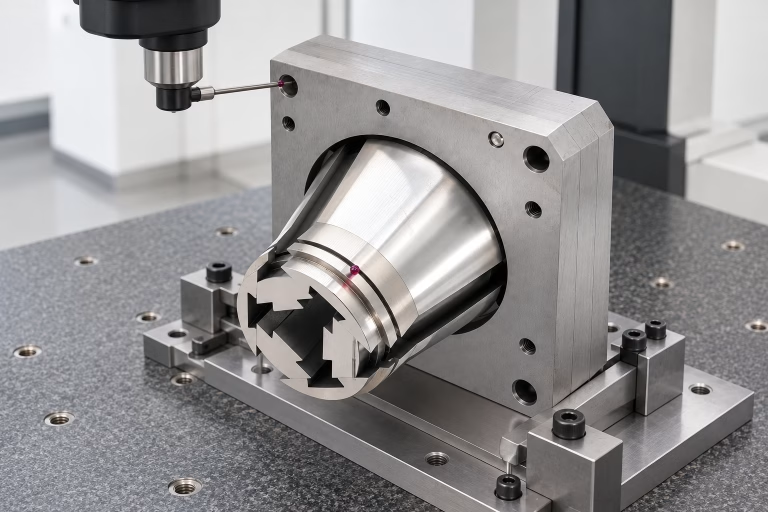
Inspection can include forming profile, support surfaces, fitting dimensions, movement clearance, EDM features and polished forming areas. For undercut applications, inspection should focus on the areas that affect release and molded-feature accuracy.
RFQ CTA
Need Similar Precision Components?
Send your drawings, material requirements, quantity and inspection expectations for engineering review.